Salmon advocates force Sac River water halt
Salmon advocates force Sac River water halt
June 8, 2015
The State Water Resources Control Board ordered the federal Bureau of Reclamation to immediately reduce water releases from Lake Shasta in order to avoid a second catastrophic salmon kill. The May 29 order from water board executive director Tom Howard, followed a May 20 request from the Golden Gate Salmon Association (GGSA) and others to the water board to better protect salmon in 2015.
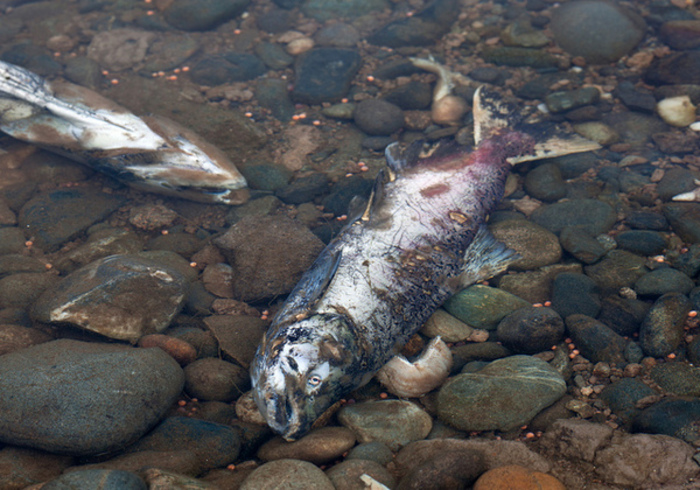
Water released from Lake Shasta in 2014 was too warm to sustain incubating salmon eggs in the upper Sacramento River leading to the loss of almost an entire generation of winter and fall run king salmon. Winter run salmon are federally protected by the Endangered Species Act. Fall run salmon provide the backbone of the ocean salmon fishery off California and most of Oregon. The 2014 losses were documented in measurements taken by the US Fish and Wildlife Service.
In response to advocacy by the Golden Gate Salmon Association, salmon hatchery managers trucked most of their baby fall run salmon in 2014 and all in 2015. This means that although the ocean will be largely empty of naturally spawned salmon that would return as three year old adults in 2017 and 2018, there may still be enough salmon from hatchery stocks to warrant fishing in those years. However, it's unclear what steps fishing regulators will take to protect naturally spawned surviving salmon in the years to come. Severe restrictions, or even a closure of the fishery, are on the minds of salmon fishermen.
“The state water board has stepped in at the last minute to save our salmon,” said executive GGSA director John McManus. “We're thankful the state water board heard the pleas of GGSA and is acting to save 2015's salmon from the drought. Hopefully we're not too late.”
GGSA told the state board at the May 20 meeting that planned water releases from Lake Shasta this summer and fall will likely fail to provide enough water to cool the river for salmon. In 2014 more water was needed for salmon than forecast by the Bureau of Reclamation but was unavailable, leading to the massive die off of fertilized, incubating salmon eggs.
“We can't afford a second year in a row of wiping out an entire generation of salmon desperately needed to keep our industry afloat,” said McManus. “We understand the order to reduce water releases from Shasta will likely cause economic harm to other people who have worked in good faith and flexibility to accommodate salmon. We're all living with the hard choices and the very unfortunate effects of extreme drought.”
The state board letter to the Bureau of Reclamation reported that water temperatures in Lake Shasta are already warmer than had been predicted and that the Bureau is admitting it would be unlikely to provide the cold water needed by salmon to a portion of the upper Sacramento River, as required under the Endangered Species Act.
“GGSA and salmon fishermen throughout the west are hoping that reserving more water in Lake Shasta now will be enough to save this year's salmon generation, which is facing a mortal threat,” concluded McManus.
The state board will continue working with federal fish agencies and water managers to keep abreast of evolving conditions in Lake Shasta and respond.
The Golden Gate Salmon Association (www.goldengatesalmon.org ) is a coalition of salmon advocates that includes commercial and recreational salmon fisherman, businesses, restaurants, a native tribe, environmentalists, elected officials, families and communities that rely on salmon. GGSA’s mission is to protect and restore California’s largest salmon producing habitat comprised of the Central Valley river’s that feed the Bay-Delta ecosystem and the communities that rely on salmon as a long-term, sustainable, commercial, recreational and cultural resource.
Currently, California’s salmon industry is valued at $1.4 billion in economic activity annually and about half that much in economic activity and jobs again in Oregon. The industry employs tens of thousands of people from Santa Barbara to northern Oregon. This is a huge economic bloc made up of commercial fishermen, recreational fishermen (fresh and salt water), fish processors, marinas, coastal communities, equipment manufacturers, the hotel and food industry, tribes, and the salmon fishing industry at large.

Website Hosting and Design provided by TECK.net