Bull trout may come back to California
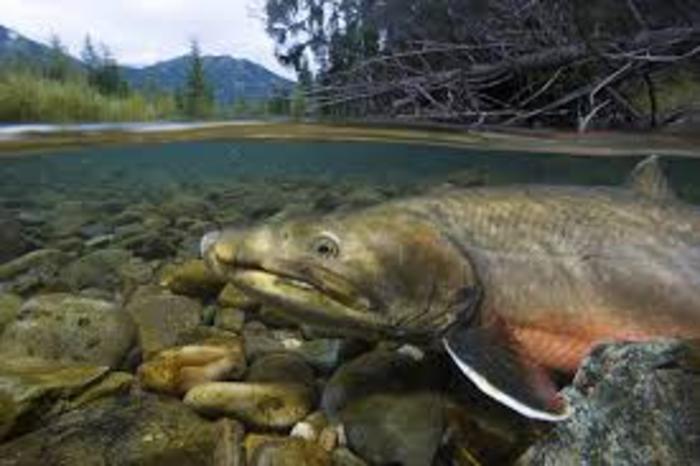
Bull trout may come back to California
October 1, 2015
AP
BOISE, Idaho (AP) — Federal officials say they’ll release their final plan today to recover struggling bull trout in five Western states with the goal of lifting Endangered Species Act protections.
The U.S. Fish and Wildlife Service says the Bull Trout Recovery Plan outlines conservation actions needed to boost populations in six recovery units spread over Idaho, Oregon, Washington, California and a tiny portion of northern Nevada.
The bull trout is extinct in California. The bull trout represents a case history of the demise of a native fish species.
Bull trout are char, the group of salmonids that includes brook trout, lake trout, and Dolly Varden. In California, bull trout were historically found only in the McCloud River system, the river with the best conditions for this species and the southernmost part of the species' range. A variety of human activities led to the loss of bull trout: dam-building and water diversions, introduction of non-native competitors like brown trout and loss of contact with juvenile salmon, an important item of food.
The bull trout in other parts of their Pacific Northwest range are in peril and have been listed under the Endangered Species Act. A reintroduction of bull trout to McCloud tributaries was unsuccessful, ten years ago.
The California state record bull trout was caught in 1968 from McCloud Lake. It weighed 9.11 pounds.
Steve Duke, bull trout recovery planning coordinator for the agency, said the plan can be used by the U.S. Forest Service, U.S. Bureau of Land Management, Bonneville Power Administration, U.S. Bureau of Reclamation as well as other entities to guide conservation efforts.
“Beginning Wednesday, they’ll know what the roadmap is for achieving recovery and fixing what’s going on in their areas of recovery,” Duke said. “I feel really good about what we’ve put out.”
Bull trout evolved with salmon after the last ice age and preyed on young salmon and salmon eggs. But bull trout have declined along with salmon, and were listed as threatened in the lower 48 in 1999. Bull trout now only occupy about 60 percent of their former range.
Threats to the cold water species include warming water caused by climate change, isolated populations, hybridization with non-native brook trout, and competition from non-native lake trout, according to experts.
The recovery plan is the result of a settlement Fish and Wildlife made last year following a lawsuit by two environmental groups — the Alliance for the Wild Rockies and Friends of the Wild Swan.
In early June, Fish and Wildlife released a draft plan that Duke said received about 50 comments. He said the final plan has some slight changes based on the comments but overall is similar to the draft plan that’s available on the federal agency’s website.
“It’s pretty disappointing, I think, the direction Fish and Wildlife has gone with this recovery plan,” said Arlene Montgomery, program director for Friends of the Wild Swan.
Specifically, the plan identifies more than 100 core bull trout areas in the six recovery units, and then designs plans specific for bolstering bull trout in each of those units.
In the four largest recovery units, the plan calls for stable populations in at least 75 percent of the core areas before bull trout in that area can be considered for delisting. Duke said the plan aims for 100 percent, but allows 75 percent in some recovery units because the agency is confident bull trout could remain viable.
The two conservation groups contend that bull trout should only be removed from receiving federal protections in their entirety, rather than piecemeal in six recovery units. Montgomery also said the minimum for each recovery unit should be 100 percent recovery.
“It just doesn’t make sense that (bull trout) can decline in some areas by 25 percent and you’re calling that recovered,” she said. “It just sort of defies logic.”
Duke said the plan is adaptable and can be updated as more information becomes available

Website Hosting and Design provided by TECK.net